Waterproof Bags OEM: MOQ 500, 6-10 Day Samples
QUANZHOU JUNYUAN BAGS designs and manufactures OEM/ODM waterproof bags for outdoor brands, retailers and promotional buyers. Our factory in Quanzhou runs 7 production lines with a monthly capacity of 200,000 pieces, shipping DDP to 100+ countries since 2014.
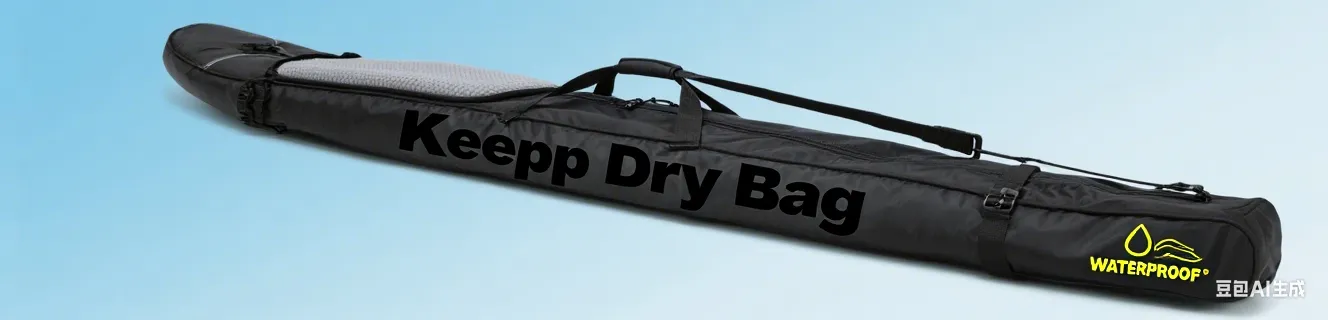
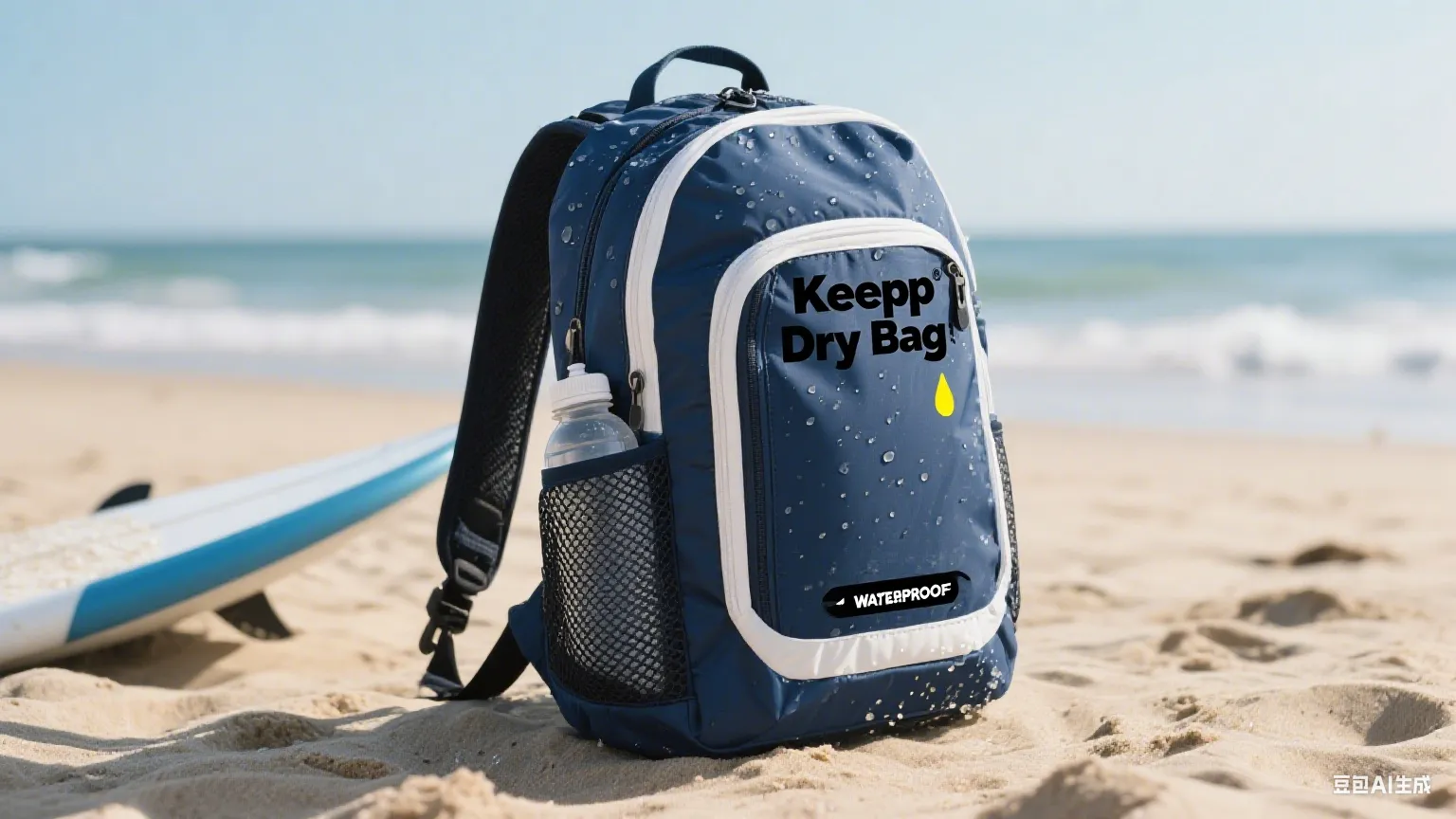
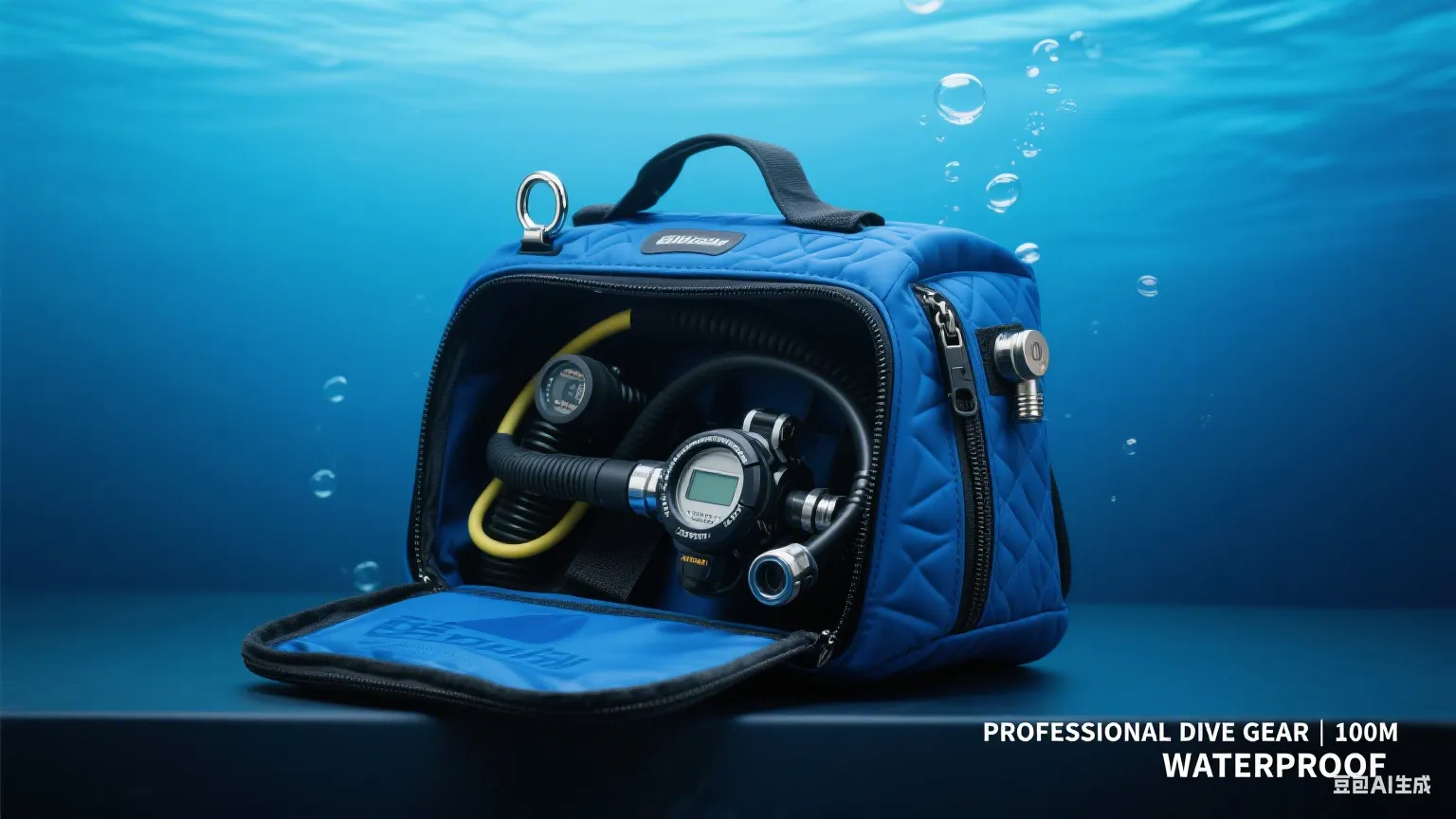
What a Waterproof Bag Manufacturer Actually Does (OEM vs ODM vs Private Label)
Search for a waterproof bag manufacturer and every result looks the same on the surface: every company builds bags, posts factory photos and claims a decade of experience. What separates a production partner from a broker is whether the company answering your email owns the cutting tables, the high-frequency welding machines, the jigs and the line schedule that turn laminated fabric into finished goods. QUANZHOU JUNYUAN BAGS has run its own floor in Quanzhou, Fujian since 2014, built around seven production lines and 149 pieces of equipment inside an SGS-verified 4,950 m² facility profile, with documented monthly capacity of 200,000 pieces. Our founder entered the bag trade in 2004, so two decades of pattern and seam knowledge sit in the engineering room rather than in a sales script.
OEM: you own the design, we own the execution
Under an OEM waterproof bag programme the intellectual property is yours. You arrive with drawings, dimensions, a materials direction and usually a reference sample you want to beat. Our engineers convert that input into a manufacturable build: graded patterns, a nesting plan that protects fabric yield, die-cut tooling for panels, and electrode or horn geometry for every seam that will be welded rather than sewn. We source cloth, film, webbing, foam and hardware against your specification and run pilot pieces before bulk cutting. The advantage is control — every radius, stitch density and hardware position answers to your document, so your fifth reorder matches your first even if you later move production elsewhere. The cost is front-loaded: new silhouettes need tooling, three-dimensional pattern work and usually more than one sampling round.
ODM and private label: platform, then brand layer
ODM flips the timeline. You select a body shape from our tooling library that already has proven patterns and line training, then customise the variables buyers market on — fabric weight and colour, coating stack, hardware finish, lining colour, closure type, logo treatment and packaging. Because the pattern risk is retired, first samples normally fall inside 6–10 working days rather than the 12–15 working days complex new structures need, with no tooling investment beyond your logo plate. Add a brand layer and you have private label: woven or silicone main label, printed care and content label, barcode hangtag, printed polybag, carton markings and language-correct inserts. This layer is where many first shipments fail, because it is administrative rather than technical and nobody owns it, so we treat each element as a line item with the same discipline as seam strength. One detail to settle early: compliance documents such as REACH statements or CPSIA reports are issued to whichever entity commissioned the testing. If they must carry your company name, tell us at quotation stage rather than retrofitting after your goods are packed.
The honest boundaries matter too. We buy TPU film, PVC-coated cloth and laminated polyester from a controlled mill chain rather than extruding film ourselves, then test every incoming roll for coating weight, peel adhesion and colour before cutting. Nor can a fully bespoke welded shape be sampled economically at fifty pieces — stabilising RF parameters and training the line consumes hours a tiny order cannot absorb. Our 500-piece minimum per style and colourway is an economic statement rather than a negotiating posture. Process detail sits on our manufacturing page.
Our Six Waterproof Bag Families at a Glance
A waterproof bag factory gets judged on how many problems it can solve with three competences — sealing fabric, closing an opening, and carrying load without tearing. Those competences rearrange into six families defined by how the product is used rather than how it looks, because use determines closure type, fabric weight and hardware far more than styling does. Volume mixes shift through the year: cooler and fishing bags build toward northern summer shipments, backpacks and travel pieces dominate back-to-school and gifting peaks, and we allocate lines around that rhythm rather than discovering it in September.
Backpacks, daypacks and commuter roll-tops
This is our largest family and the one most often specified by brands building a core waterproof range, spanning slim 18–22 litre commuter builds up to 40 litre technical daypacks. It is where the roll-top versus zip decision gets made most often. A roll-top closure removes the single biggest leak path in any bag — the zip coil — and is the honest choice for anything that must survive full immersion or a day strapped to a kayak deck. A water-resistant zip closure, typically a YKK AquaGuard #5 or #8 on PU-coated tape under a storm flap, gives faster access and a cleaner silhouette for urban use. Many buyers run both versions against the same body pattern, keeping tooling common while letting marketing position one SKU as urban and the other as technical.
Dry bags, roll-top sacks and tote-and-duffel hybrids
Dry bags are the purest test of welding skill. A cylindrical sack has one closure and one seam family, so any inconsistency in weld temperature, dwell time or pressure appears immediately as a leak. We build these from fully welded TPU laminate with no needle penetrations at all on the primary body, which is why they routinely pass immersion testing that a stitched bag of identical fabric would fail. The same competence then scales into open-mouth totes, weekend duffels and gear haulers, where a wide mouth and a structural base matter more than submersion. Browse current platform shapes in our product index.
| Family | Capacity | Primary closure | Core fabric | Rating | Explore |
|---|---|---|---|---|---|
| Waterproof backpacks | 18–40 L | Roll-top or AquaGuard zip | 500D / 840D polyester TPU | IPX6–IPX7 | waterproof-backpacks |
| Dry bags & roll-top sacks | 5–60 L | Roll-top with side-release buckle | 420D nylon ripstop TPU | IPX7–IPX8 | products |
| Travel bags & duffels | 30–90 L | #8 coil zip under storm flap | 840D polyester TPU | IPX5–IPX6 | travel-bags |
| Cooler & insulated bags | 10–35 L | Waterproof zip or roll-top | PVC 500D, welded liner | IPX6 liner | cooler-bags |
| Fishing & tackle bags | 10–45 L | Zip plus welded base tray | 1000D PVC tarpaulin | IPX6–IPX7 base | fishing-bags |
| Sports & outdoor bags | 15–60 L | Roll-top, zip or drawcord | 500D–840D TPU laminate | IPX6 | sports-bags |
Insulated, fishing, travel and sports families
Cooler bags add a second engineering problem: keeping water out is easy compared with keeping meltwater in. We weld rather than sew the inner liner so there is no stitch line for liquid to wick through, then insulate with PE foam at 25 kg/m³ or EPE at 30 kg/m³ depending on structural requirement and price target. Fishing bags reverse the priorities — the base matters most, so a welded tarpaulin tray, a 1000D PVC shell and hardware that has passed a 48-hour neutral salt-spray check outweigh low weight. Travel and sports pieces sit between: larger panels, heavier loads, more hardware attachments, and more attention to reinforcement geometry at every stress concentration.

If you are unsure which family fits the product in your head, send us the use case before you send us a drawing. "Must survive being dropped in a lake while carrying a laptop" produces completely different construction from "must look appropriate in a city office while carrying a laptop", even though both briefs describe a waterproof backpack. Defining that difference first is the most effective way to avoid paying for engineering you will never need.
Materials We Laminate and Weld (TPU / PVC / 420D–1000D Polyester)
Material selection drives roughly half of your unit cost and determines which sealing technology your bag can use at all. Fabric that cannot be welded has to be sewn and taped, which adds labour, adds weight and adds a long-term failure mode. Understanding the split between TPU laminates, PVC-coated cloth and lightweight ripstop nylon lets you decide deliberately rather than inheriting whatever the previous supplier happened to stock. We hold relationships across all three chains and we test every incoming roll before it reaches the cutting table: coating weight against the mill certificate, peel adhesion on a sample strip, hydrostatic head on a cut swatch, and colour against a reference under standardised lighting.
TPU-laminated polyester: 500D, 840D and 1000D
TPU film laminated to polyester is the workhorse of modern technical waterproof bags. Film thickness runs 0.1 mm to 0.3 mm depending on abrasion requirement, applied over a PU backing coat of roughly 0.15 mm that protects the base weave. A 500D platform carrying 0.10–0.15 mm film reaches around the 10,000 mm hydrostatic head mark — adequate for sustained rain and spray, light enough for daily commuting. Moving to 840D with 0.20–0.25 mm film pushes toward heavy-duty application and ≥20,000 mm hydrostatic head, at a weight penalty you will feel in the harness. The 1000D grade exists for bases, trays and high-abrasion zones rather than whole bodies; specifying it everywhere is a common source of unnecessary cost and unnecessary grams.
PVC-coated cloth and 420D nylon ripstop
PVC delivers the strongest weld and the lowest material cost per square metre, with roughly 0.35 mm coating on a 500D base cloth. It welds under high-frequency energy, resists abrasion and salt water extremely well, and therefore dominates fishing bags, dry bags and welded trays. Its weaknesses are fold memory in cold weather, a heavier hand, and regulatory scrutiny in European retail channels where phthalate content must be documented and declared. At the other end, 420D nylon ripstop with TPU laminate is the lightweight option: the ripstop grid stops a puncture propagating and the pack feels noticeably lighter, but thin material telegraphs every wrinkle and any weld inconsistency, so it demands cleaner handling on the line.
| Material | Construction | Hydrostatic head | Weldable | Where we use it |
|---|---|---|---|---|
| 500D polyester TPU | TPU film 0.10–0.15 mm over 0.15 mm PU backing | ≥10,000 mm | RF and hot-air | Commuter backpacks, light daypacks, liners |
| 840D polyester TPU | TPU film 0.20–0.25 mm | ≥20,000 mm | RF and hot-air | Technical backpacks, travel duffels, haul bags |
| 1000D polyester TPU | TPU film up to 0.30 mm | ≥20,000 mm | RF preferred | Reinforced bases, trays, high-abrasion panels |
| 420D nylon ripstop TPU | Ripstop grid, TPU film 0.10 mm | ≥10,000 mm | Hot-air preferred | Dry bags, ultralight sacks, stuff sacks |
| PVC 500D tarpaulin | PVC coating 0.35 mm both faces | ≥20,000 mm | High-frequency, strongest weld | Fishing bags, welded trays, cooler shells |
Foam, webbing, hardware and compliance
A bag fails at its attachments far more often than in the middle of a panel. We default to branded hardware — Duraflex side-release buckles, YKK zips and sliders, ITW components where the design calls for them — and every metal component entering our approved list passes a 48-hour neutral salt-spray check. Webbing is specified by tensile strength relative to load rather than by feel, because a strap that looks substantial but stretches under load makes the whole bag feel cheap within weeks. Insulation uses PE foam at 25 kg/m³ where compression recovery matters and EPE at 30 kg/m³ where conformability and lower cost win. Compliance attaches to materials rather than to finished bags: REACH SVHC declarations, California Proposition 65 wording, CPSIA lead and phthalate testing, and emerging PFAS restrictions on durable water-repellent finishes. Tell us your destination market at quotation stage and we will propose a stack that can actually be documented.
Welded vs Sewn-and-Taped: How We Build a Watertight Seam
Every needle hole is a potential leak path, which is why the industry moved from making bags out of waterproof fabric to sealing them so water cannot reach the needle at all. Two approaches dominate modern construction and most products use both. Knowing which applies where explains most of the price gap between two quotes that look identical on a specification sheet.
RF, high-frequency and hot-air welding
Welding fuses two thermoplastic surfaces into one continuous bond without a needle touching the material. Radio-frequency welding heats polar molecules inside PVC and certain TPU films electromagnetically, producing the strongest and most consistent bond available on PVC tarpaulin. High-frequency welding covers thicker stacks. Hot-air welding directs precisely controlled heated air into the seam interface while pressure rollers close the joint — slower than RF on simple seams, but far more flexible for three-dimensional geometry and for TPU films that resist radio-frequency energy. On every welded line we validate seam peel strength at ≥ 8 N/cm using production samples rather than laboratory coupons, because operator technique, ambient humidity and fabric age all move that number in real conditions.
Sewn-and-taped hybrid construction
Most backpacks cannot be entirely welded. A harness, a structured back panel and a padded laptop sleeve need three-dimensional assembly that only a needle delivers economically. The answer is hybrid construction: panels are sewn at 8–10 stitches per inch for structural integrity, then the stitch line is sealed from the inside with 20 mm waterproof tape applied under heat and pressure. The tape bridges the needle holes; the stitching carries the load. Get either element wrong and the seam fails — too few stitches and the panels creep apart before the tape takes strain, too much heat during taping and the film thins until it cracks at the fold.
Where each method belongs and what it costs
Our rule from thousands of builds: weld everything that only has to hold water, sew and tape everything that has to hold weight. Dry bags, cooler liners, roll-top bodies and fishing tray interiors therefore run fully welded, while harness attachments, internal organisers and load-bearing webbing get stitched, reinforced with bartacks at stress points, then taped where the seam faces water. A fully welded dry bag costs less per unit and leaks less than a sewn equivalent; a fully welded structured backpack would be enormously expensive and would not carry load better. This trade-off is what we quietly optimise during design review — see our engineering services.

One testing tip for buyers comparing factories. Ask to see a cross-section of a welded seam cut open after a peel test, not just a passing report. A good weld tears the parent fabric before the bond releases; a poor one peels cleanly along the interface, meaning parameters were tuned for speed rather than strength. That single question eliminates more suppliers than any certificate.
Waterproof Ratings Explained (IPX6 / IPX7 / IPX8, Hydrostatic Head mm)
Waterproof claims are only useful when everyone agrees what they measure, and much consumer-facing copy does not. Three numbers circulate in this industry, each answering a different question, and conflating them is how a brand ends up with a return rate it never budgeted for. Getting it right costs nothing at quotation stage and prevents problems that cannot be fixed once goods are on the water.
Hydrostatic head: what the fabric resists
Hydrostatic head, in millimetres, measures how tall a column of water fabric supports before penetration. A ≥10,000 mm reading means the material resisted a ten-metre water column under standard test conditions — plenty for sustained rainfall and spray, and the realistic target for lightweight commuter products. A ≥20,000 mm reading indicates heavy-duty construction suited to products set down in standing water or kneeled on wet ground. This figure describes fabric, not the finished bag: a 20,000 mm cloth with untaped seams still leaks, which is why we quote fabric ratings alongside finished-product results.
IPX ratings: what the assembled product survives
The IPX series within IEC 60529 tests finished products, making it the more honest number to print on packaging. IPX6 subjects the bag to powerful water jets from all directions for at least three minutes; this maps to heavy rain, kayak spray and road spray at speed. IPX7 means thirty minutes of immersion at one metre with no ingress, and IPX8 indicates continuous immersion beyond one metre under conditions agreed between manufacturer and buyer. Note what none of them measure: abrasion resistance, UV stability, or coating life after two summers in a hot car.
| Rating | What the test does | Real-world equivalent | What we build to meet it |
|---|---|---|---|
| IPX5 | Low-pressure jet from all directions, 3 minutes | Light rain, brief exposure | Storm-flapped zip, coated fabric, taped main seams |
| IPX6 | Powerful jets, 100 L/min, 3 minutes minimum | Heavy rain, deck spray, road spray | Roll-top or AquaGuard zip with full tape coverage |
| IPX7 | Immersion at 1 m for 30 minutes, no ingress | Dropped overboard, flooded compartment | Fully welded body, no exposed needle holes below closure |
| IPX8 | Continuous immersion beyond 1 m, conditions agreed | Sustained underwater or drag-through use | Fully welded build plus submersion-rated closure |
| ≥10,000 mm | Hydrostatic head, fabric only | Sustained rain, general wet use | 500D TPU laminate, welded or taped seams |
| ≥20,000 mm | Hydrostatic head, fabric only | Standing water, heavy deck use | 840D–1000D TPU or PVC 500D tarpaulin |
Choosing the rating you should actually claim
Over-specifying is expensive and under-specifying is dangerous, so decide from realistic worst-case use and legal exposure. A commuter backpack rarely deserves an IPX7 claim even if buyers assume it does — but if any product page implies submersion, consumer law in most markets will hold you to it. Build to IPX6 for commuter, travel and sports products where closure speed matters; step to IPX7 for dry bags, fishing trays and anything sold for paddling; and print only the rating you tested on the finished production unit with the closure fully closed. We retain those reports on file and can share protocol detail through our quality documentation.

Customisation Options: Logo, Colour, Hardware, Lining, Packaging
Once construction is settled, differentiation happens in detailing. Five variables carry almost all perceived brand value in a waterproof bag programme, and each has a cost curve and a minimum-order implication that buyers rarely discover until after the first quote. We lay all five out early because the combinations interact — a decision here often unlocks or blocks an option there.
Logo application methods
Silicone badges and TPU patches deliver the most premium result and can be welded directly onto the body, producing a bond stronger than decorative stitching with no added needle holes. Heat-transfer prints suit flat panels and photographic gradients but need testing for abrasion and cold-crack behaviour. Screen printing is the economical choice for simple one and two-colour marks and stays highly durable on TPU. Woven labels sewn into a seam allowance remain the retail authenticity standard at the lowest unit cost. Each method brings a setup cost and a minimum: silicone tooling carries the highest setup and the highest perceived value, screen printing the lowest of both.
Colour, hardware finish and lining
Colour is the most deceptively expensive variable. Choosing from our existing laminated colour library costs nothing and delays nothing, whereas a custom dyed lot carries a fabric minimum that must be reconciled against your order quantity — if you need an exact brand Pantone, plan it into a season rather than a first order. Hardware finish in matte black, gunmetal or anodised colour is generally available at modest surcharge with no additional tooling. Lining colour is the highest-value customisation per dollar: contrast interior fabric photographs well, reflects light so users can find items, and is the detail reviewers mention most often.
Packaging and retail presentation
Final presentation is where a good product reads as a premium brand or as generic goods. Options run from bulk polybag packing for warehouse receipt through printed polybags with warning text and barcodes, to custom hangtags, header cards, belly bands, gift boxes and printed cartons. Every element adds setup cost, unit cost and assembly labour that compounds at volume, so approve packaging before rather than mid-programme.

Every combination gets recorded into a written specification accompanying your order through sampling, bulk production and inspection. That document matters more than the sample itself — the sample can be carried around a trade show and lost, whereas the specification guarantees your fifth reorder matches your first. The full workflow is described on our services page.
MOQ 500 pcs per Style — How Order Structures Work
Minimum order quantity is where first conversations either stall or get productive. Our standard is 500 pieces per style and colourway, and the reason is arithmetic rather than policy. Understanding that arithmetic helps you structure orders that get accepted quickly and priced properly.
Why 500 makes economic sense
Setting up a welded run means confirming machine parameters, running scrap pieces to stabilise temperature and dwell, positioning fixtures, training operators on new geometry and absorbing the first units as process loss. None of that effort scales down. Below 500 pieces the fixed costs spread across too few units, producing an unreasonable unit price and a schedule that disrupts neighbouring orders. There is a material dimension too: mills sell laminated fabric in lot quantities, so very small consumption often means paying for surplus roll stock. Above 1,000 units per style both effects disappear and pricing improves measurably.
How to structure a first order intelligently
The structure we recommend most often is one platform across two or three colourways, split so each colourway clears 500 pieces. You get shelf presence and real sell-through data per colour before committing to a second run. Alternatives include taking the full quantity in one flagship colour and reserving the second colourway for reorder, or splitting across two families that share a trim package so hardware and webbing buy quantities consolidate across a larger total.
Mixing products across a single order
We consolidate mixed styles into one container when the line schedule permits, and we do it regularly for brands testing several categories at once. The constraints are simple: each style and colourway still carries its own 500-piece minimum, mixed orders extend the production window slightly because lines are reconfigured between styles, and shared packing collateral generally lowers total packaging cost. Below minimum is negotiable in one situation — when a smaller first quantity is linked to a written reorder schedule. If you can commit to a 2,000-piece follow-up season, we can sometimes structure opening quantities differently because setup amortises across both. That conversation requires a forecast rather than a request, but it succeeds more often than buyers expect. Tell us your mix on the contact page and we will say honestly whether it belongs in one order.
Sampling: 6–10 Working Days from Tech Pack to Approved Sample
Sampling is where a waterproof bag programme either accelerates or quietly loses two months. Our standard window runs 6–10 working days from a complete tech pack to a shippable sample; structures that need new tooling or multi-material assembly take 12–15 working days. The distinction between those two numbers is almost always decided before work starts, by how complete your documentation is.
What we need in the tech pack
A usable technical package contains dimensioned drawings with tolerances, a bill of materials naming each component, hardware references or photos, print artwork in vector form with Pantone references, closure specification, stitch and seam instructions, packing instructions, and any test standards the finished product must meet. Photos of a reference product with marked-up notes are an acceptable substitute for formal drawings in early development, provided dimensions are unambiguous. What slows things down is not a missing drawing — it is ambiguity about which a number applies to, or a fabric reference nobody can source.
Inside the sampling window
Days one and two go to pattern development and BOM confirmation: we check proposed materials against availability and flag anything that would hold up the build. Days three to five cover cutting, fabrication and pilot weld parameters — the stage where we determine whether your fabric welds at the requested thickness, which occasionally produces a material recommendation back to you. Days six to eight are assembly, finishing and internal checks, including a hydrostatic check on fabric from the same lot and a functional check of every closure. The final days are photography, measurement against your specification and packing for courier.
Sample rounds deserve realistic expectations. First samples commonly produce three or four adjustment points — a strap angle, a tape width at a corner, a hardware position, a colour shift after lamination. Budget one revision round for any new shape and two for a complex structured build. We quote sample charges per build and confirm in writing how those charges are treated once a bulk order is placed, so there are no surprises when you convert.
Bulk Production: 35–50 Days and What Drives the Number
Bulk production runs 35–50 days after sample approval and deposit confirmation. The range genuinely varies by order rather than being a negotiating band, and understanding the drivers lets you place orders that land at the short end. Nothing about this schedule starts until two things are true: the approved sample is physically in our reference room, and the deposit has cleared. Any change requested after both are true costs calendar time regardless of how small the change is.
| Driver | Adds to lead time | How to shorten it |
|---|---|---|
| Material in stock | 0 days vs 10–18 days | Choose from our existing laminated colour library |
| Custom dyed or printed lot | 12–20 days | Commit to colour at forecast stage, before bulk season |
| Branded hardware (YKK, Duraflex) | 5–12 days | Approve generic equivalents for sampling, branded for bulk |
| Welded construction share | 2–5 days | Keep high-complexity welding to panels, not whole assemblies |
| Printed retail packaging | 7–14 days | Approve artwork early; printed collateral is booked separately |
| Third-party testing | 5–10 days | Book testing at the start of production, not the end |
How the 35–50 days are actually spent
The first third is material consolidation: receiving fabric, confirming every roll against the approved reference, cutting lining and foam, and staging hardware so the line never stops waiting for components. The middle is fabrication, scheduled across seven production lines so that your cutting window does not collide with another customer's critical path. The final third is finishing, inline inspection, packing and documentation — and it is the part most frequently squeezed when planning arrives late, which is exactly how avoidable defects appear in the last cartons.
Planning that protects your launch date
Ship against your retail date rather than to it. A 35-day production window plus booking, loading and transit does not leave room for a second AQL inspection if the first one fails, and a failed inspection is recoverable only if you built slack into the plan. Customers who share a rolling forecast get their materials reserved ahead of order confirmation, which routinely pulls two weeks out of their standard delivery. Full capacity and scheduling detail sits on our manufacturing page.
Quality Control to AQL 2.5 (ISO 2859-1): The Four Gates
We inspect to AQL 2.5 under ISO 2859-1, which defines how many units to sample from a lot and how many minor or major defects trigger acceptance or rejection. Buyers often assume inspection means someone checks bags at the end; in practice the standard only works when failures are caught at the gate where they originate, because a seam parameter drift discovered after five thousand units are assembled becomes a sorting exercise rather than a correction.
| Gate | When | What is checked |
|---|---|---|
| Gate 1 — incoming material | Before cutting | Coating weight, hydrostatic head, peel adhesion, colour under standard light |
| Gate 2 — first-piece approval | Start of run | Weld peel ≥ 8 N/cm, stitch density 8–10 SPI, dimensions, hardware function |
| Gate 3 — inline patrol | Throughout production | Tape adhesion, bartack placement, closure alignment, contamination |
| Gate 4 — final random inspection | Packed goods | AQL 2.5 sampling by lot size, carton marking, packing accuracy |
Defect classification matters more than the standard
Critical defects — a leaking seam, a broken load-bearing attachment, a closure that will not seal — carry zero tolerance regardless of sample size. Major defects such as visible delamination or incorrect hardware colour sit inside the AQL calculation, while minor issues like thread ends fall within tolerance up to the acceptance number. We agree the classification with you in writing before production so nobody argues about definitions while a container waits.
Every unit leaving our floor carries a 12-month warranty against manufacturing defects, which is enforceable only because we hold retained samples and batch records for each production run. When a claim arrives months later we can retrieve the reference sample, the material lot number and the inspection record, establish whether the failure is manufacturing or use-related within days, and correct the root cause rather than the symptom. Read how the system is documented on our quality page.

Export Logistics, FOB Xiamen and Documentation
We quote on FOB Xiamen. Your price therefore covers production, inland consolidation from Quanzhou to Xiamen port, export clearance and loading onto the vessel you nominate; everything after the ship's rail — ocean freight, insurance, destination charges and delivery — belongs to whichever party you nominate. This arrangement gives you control of the freight file, which matters more than it appears: the party paying freight usually decides routing and carrier, and that decision drives transit time more than sailing schedules do.
Incoterms we can support
Many customers eventually move to CIF or DDP as their logistics capability matures. CIF adds freight and insurance to your unit cost while leaving risk transfer and destination charges on your side, which suits buyers testing new volumes. DDP moves almost all responsibility to us through a nominated forwarder and is genuinely convenient for brands without an import desk — but it prices that convenience in, and it makes your landed cost dependent on freight market conditions at the moment your agent quotes. We are happy to quote all three side by side so you can compare real numbers rather than abstractions.
Documentation you receive
A standard shipment file includes the commercial invoice, packing list broken down by carton, bill of lading, certificate of origin where applicable, packing declaration, and copies of any test reports booked against your order. Some documents are issued by authorities rather than by factories; we will tell you which we can issue and which you must arrange, rather than letting a shipment get held at destination.
Carton configuration deserves early agreement. We calculate packed carton dimensions from your actual specification, produce a loading plan for your preferred container type, and share it before booking so you can check that cube rather than weight is the binding constraint. Requesting that your bags ship folded flat rather than assembled reduces volume substantially on some shapes and changes that calculation materially. Send your destination port and preferred forwarder to our contact page and we will work the numbers up.

What Drives Unit Cost (and How to Engineer It Down)
Most waterproof bag quotes look like a single number and behave like a black box. In reality unit cost is the sum of about eight drivers, and four of them respond to design decisions you can still change after quotation. The goal is never simply the lowest number — it is the lowest number that still survives your warranty claims rate.
| Cost driver | Share effect | Engineering route to reduce it |
|---|---|---|
| Fabric area and cutting yield | High | Simplify panel count; square off radii that create waste |
| Material grade and coating | High | Reserve 1000D for bases; use 500D elsewhere |
| Seam method | Medium | Welded seams cost less than sewn-and-taped over the life of a run |
| Hardware specification | Medium | Standardise SKUs across your range to raise buy quantity |
| Logo application | Low–medium | One method across the range to amortise setup |
| Packaging and collateral | Medium | Approve once; avoid mid-season reprint runs |
| Order quantity per style | High | Above 1,000 pcs per style pricing improves measurably |
| Season and line pressure | Variable | Share forecasts; place outside the August–October peak |
Cost reduction that does not destroy the product
The most reliable savings come from panel count rather than material grade. A design with fourteen cut pieces costs more to cut, more to handle and more to assemble than one with nine delivering the same function — reducing complexity lowers labour minutes and defect opportunity simultaneously. Standardising hardware across your range is the second lever, because ten thousand identical buckles price better than four lots of two thousand five hundred each. The third is honest: raising quantity per style from 500 toward 1,000 removes the setup amortisation penalty that dominates small runs.
Where cost cutting becomes expensive
Some reductions only look like savings. Removing reinforcement at load attachments produces warranty claims costing more than the saving. Cutting tape width inside seams saves cents and raises leak rates. Substituting unbranded zips for YKK removes a component with a measured failure rate and shifts that risk onto you. We will quote a lower specification when asked, but we will also say in writing which line item carries the risk.
Seven Mistakes Buyers Make When Sourcing Waterproof Bags
These patterns repeat across hundreds of programmes, and avoiding them costs less in time than recovering from them.
- Ordering from photographs instead of specifications. A photo shows how a bag looks, never how it is built. Without a written specification covering seam method, stitch density, tape width, hardware brand and test standard, you have no reference to evaluate your shipment against and no basis for a claim.
- Specifying heavier fabric than the product needs. Requiring 1000D across the whole body instead of restricting it to bases adds weight and cost, with little measurable field benefit.
- Ignoring closure choice until after costing. The closure determines the achievable rating. Switching from zip to roll-top late re-opens the upper pattern and tooling, so decide it during design review.
- Assuming the sample is the standard. Samples are built by the most skilled operators under ideal conditions. Bulk quality comes from tooling, line training, inline patrols and AQL discipline, not from the bag in your hand.
- Booking tests after production. Testing takes 5–10 days and sometimes reveals failures. Book it at the start of the run so a failed result stays actionable.
- Packing decisions left until the end. Barcodes, warning text, origin marking and carton marks are treated as afterthoughts, then discovered to have their own minimum order and lead time.
- Choosing a supplier purely on unit price. The lowest quote usually differs in the places most likely to fail — hardware provenance, tape coverage, hidden reinforcement. Compare against a written specification rather than a number.
Send us the quote you are holding plus its specification and we will mark where the two disagree. That review costs nothing and reveals more than another round of price negotiation.
Why Brands in 40+ Countries Work With QUANZHOU JUNYUAN BAGS
Brands across more than forty countries put programmes through our lines for reasons that reduce to verifiable facts rather than adjectives. QUANZHOU JUNYUAN BAGS was established in 2014 and has grown into a 137-person operation running seven production lines with 149 pieces of equipment inside an SGS-verified 4,950 m² facility profile in Quanzhou, Fujian. Documented monthly capacity stands at 200,000 pieces, which means a seasonal spike in your order rarely competes for line time against someone else's emergency. Our founder has been in the bag trade since 2004, and that two-decade perspective is why our engineering review tends to question a design before it questions a price.
What you get that is hard to copy
The practical value is breadth inside one relationship. Because we build six product families from a shared material and hardware supply chain, you can validate one category and extend into others without re-qualifying a new factory. Because we weld and we sew-and-tape in the same facility, we can recommend the right method per component rather than pushing whichever machine we happen to own. Because export documentation is handled from FOB Xiamen as standard, your freight forwarder can work with a file that arrives complete the first time.
Where we are honest about limits
We are strongest in soft-goods waterproof construction — TPU and PVC laminates, welded and taped assemblies, backpacks through insulated and fishing bags. If you need moulded hard cases, injected components or integrated electronics, those are outside our competence and we will tell you immediately rather than subcontracting silently. We want the programmes that match our equipment.

Every programme is covered by standard payment terms of T/T 30% deposit and 70% before shipment, a 12-month warranty against manufacturing defects, and inspection to AQL 2.5 under ISO 2859-1. You can read the background story on our about page, review process capability on our manufacturing page, or go straight to a specification discussion through our contact page.
Start Your Waterproof Bag Programme
If you are sourcing waterproof bags for the first time, start with your use case rather than your design. Tell us who carries the bag, what they carry in it, where the water comes from and what your retail price needs to be, and we will recommend a construction route, a material stack and a realistic budget range within two working days. Send drawings, reference photos or a paragraph describing the product in your head to service@junyuanbags.com — there is no cost and no obligation attached to that first feasibility review, and if your project is genuinely better served by a different construction than anything we build, we will say so plainly.
If you already hold a quotation and want a second read before you commit, we will review it against a written specification and mark every point where the two disagree — including the line items where reducing cost transfers risk onto your warranty exposure. For faster discussion of an active project, reach our engineering team directly on WhatsApp at https://wa.me/8617750020688, where we can exchange photos of your reference product, confirm material availability and pencil a production window in the same conversation.
How to Brief Us on Your First Programme
A first brief does not need to arrive as a finished tech pack. In practice, roughly seven out of ten programmes we open begin as a sketch, a photo of a competitor product, a screenshot from a trade show, or a spreadsheet with dimensions and a target price. What determines whether the first reply is useful is not the polish of the document but whether four questions are answered: what the bag must carry, what it must survive, how many you need, and when you need them.
The strongest briefs we receive share a common shape. They name the use case in one sentence, list the contents the bag must hold with approximate weights, state the target retail price or target FOB, and give a launch window. Everything else — fabric, coating, closure, trim — can be worked out in the feasibility review. When a buyer sends only a photograph and the words "like this but cheaper", the conversation takes two extra rounds because we have to reverse-engineer the intent before we can engineer the bag.
What We Send Back Within 24 Hours
For any brief that includes a use case and an approximate size, we return a one-page feasibility note. It contains a proposed construction (shell fabric, coating weight, seam method, closure type), an indicative FOB range per unit at the 500-piece and 3,000-piece tiers, a list of the three or four decisions that will move the price most, and a sampling slot date. This is not a quotation. It is a structured starting position that lets you see whether your target is reachable before either side invests time in drawings.
The Four Gaps That Delay Most Projects
First, unspecified capacity. A buyer who says "a medium backpack" will receive three different proposals because 18 L, 25 L and 32 L are all medium. Second, an unstated waterproof target. "Waterproof" can mean a bag that survives a rain shower (IPX4, taped seams, water-resistant zip) or one that floats (IPX7, welded shell, roll-top closure). The gap between those two builds is often 25–35% of unit cost. Third, unresolved branding. If the logo is going to be debossed into a TPU panel, the artwork needs to be single-colour and vector-based; if it is a woven label, it needs to be designed for a 45 mm width. Fourth, an unrealistic calendar. A programme that needs to be on a container in six weeks is not impossible, but it removes the revision round that most first-time bags need.
Capacity, Seasonality and Booking Production Slots
Seven lines running 149 machines give us roughly 200,000 pieces a month, but that figure is an average across a year, not a tap that can be opened on any date. Production capacity in the bag trade behaves like a set of overlapping waves, and buyers who understand the wave pattern get better dates and better prices than buyers who treat the factory as a vending machine.
The first wave is the pre-Chinese-New-Year push. Factories in Fujian and Guangdong typically wind down for two to four weeks around the Spring Festival, and the weeks immediately before the shutdown are the most contested production window of the year. Orders that need to ship before that window must be confirmed with materials in-house at least six weeks ahead, because fabric mills and hardware suppliers close earlier than bag factories and restart later.
The second wave is the northern-hemisphere spring build for outdoor and travel ranges, when brands want goods on shelves by April and May. This is when waterproof and cooler programmes compete for the same welding capacity, because both depend on RF and hot-air equipment rather than plain sewing. A cooler bag and a dry bag cannot both be welded on the same machine at the same hour.
The third wave is the autumn promotional build, driven by gifting, back-to-school and holiday retail. It overlaps with the raw-material tightening that follows peak shipping season, when container availability and freight rates both move against the buyer.
| Window | Typical pressure | What to do |
|---|---|---|
| Jan–Feb | Spring Festival shutdown, 2–4 weeks | Confirm before the break with materials in-house; add two weeks to any plan that crosses it |
| Mar–May | Spring outdoor and travel builds; welding capacity tight | Book welding slots at sample approval, not at PO |
| Jun–Aug | Steady state; best window for development work | Use this period for sampling and revisions |
| Sep–Nov | Autumn promotional build; freight volatility | Lock freight earlier than usual; consider splitting shipments |
| Dec | Year-end close, stock-taking | Avoid promising ship dates in the last ten days of December |
Booking a slot is a commercial act, not a calendar entry. A slot is held when a deposit is received and the material list is released to purchasing. Before that point, the date is an intention. This is why we ask for the deposit and the approved sample together: a confirmed sample plus a deposit converts an enquiry into a scheduled build, and scheduled builds get material allocated first when a mill runs short.
For buyers running multi-style ranges, splitting the order across two production windows is often better than compressing everything into one. A 5,000-piece programme spread over two windows keeps the welding lines from becoming a single point of failure, reduces the risk of one colour running short, and gives the buyer a natural checkpoint to correct anything the first shipment revealed. The trade-off is more inbound freight movements, which is usually a smaller cost than a delayed launch.
Frequently Asked Questions
What is the minimum order quantity for custom waterproof bags?
Our MOQ is 500 pieces per style and colourway. Setup economics explain it: tooling preparation, stabilising weld parameters, operator training and fabric lot minimums are fixed costs regardless of run length. Ordering above 1,000 pieces per style improves unit pricing measurably.
How long does sampling take for an OEM waterproof bag?
Sampling runs 6–10 working days from a complete tech pack to a shippable sample; structures needing new tooling or multi-material assembly take 12–15 working days. The biggest variable is documentation quality rather than complexity — an unambiguous bill of materials and dimensioned drawings save more time than anything else.
What is your bulk production lead time?
Bulk production takes 35–50 days after sample approval and deposit confirmation. Material availability drives most of the range: stocked laminated fabric and standard hardware sit at the short end, while custom dyed lots, branded hardware bookings and printed retail packaging extend the window. Sharing a rolling forecast lets us reserve materials early.
Can you produce both welded and sewn-and-taped construction?
Yes, and most products use both. Fully welded assembly suits dry bags, cooler liners and roll-top bodies where only water retention matters. Harness attachments, structured panels and load-bearing areas are sewn at 8–10 stitches per inch and taped with 20 mm waterproof tape, giving strength pure welding cannot deliver economically.
Which waterproof rating should I specify for a commuter backpack?
IPX6 covers heavy rain, deck spray and road spray, and is the appropriate claim for a commuter product with a storm-flapped zip or roll-top. IPX7 requires 30 minutes of immersion survival and suits dry bags and paddling products. Print only the rating you have actually tested on finished units with the closure closed.
What fabrics do you work with?
We laminate and weld 500D, 840D and 1000D polyester with TPU film between 0.1 mm and 0.3 mm, 420D nylon ripstop with TPU for lightweight builds, and PVC 500D tarpaulin with roughly 0.35 mm coating. Hydrostatic readings run ≥10,000 mm for light-duty and ≥20,000 mm for heavy-duty grades.
How do you test seams?
Welded seams are validated at ≥ 8 N/cm peel strength using samples pulled from production rather than laboratory coupons, because humidity, fabric age and operator technique all affect the result. Taped seams are checked for adhesion width and coverage, and sewn construction is verified against the agreed stitch density before the line runs.
What does AQL 2.5 inspection mean for my order?
AQL 2.5 under ISO 2859-1 sets how many units are randomly sampled from your lot and how many defects trigger acceptance or rejection. We combine it with three earlier gates — incoming material testing, first-piece approval and inline patrol — because catching drift at the source prevents lot-level failures.
Can I mix several styles in one container?
Yes, when the line schedule permits. Each style and colourway still carries its own 500-piece minimum, and mixed orders extend production slightly because lines are reconfigured between styles. The upside is consolidated packing collateral and simplified freight, which generally lowers per-unit packaging and shipping cost.
What are your payment terms?
Standard terms are T/T 30% deposit with 70% balance before shipment. The deposit releases materials and line capacity; the balance releases the container. We confirm both amounts in writing against the final invoice so there is no ambiguity once goods are packed and ready.
Do you ship FOB Xiamen only?
FOB Xiamen is our quotation base because it gives you control of the freight file. We can also quote CIF or DDP side by side so you can compare total landed numbers directly. Whichever you choose, you receive commercial invoice, packing list, bill of lading and any test reports booked against your order.
Can you help reduce the unit cost of my current design?
Usually yes. The highest-yield reductions come from cutting panel count, restricting heavy grades to base panels only, standardising hardware across your range to raise buy quantity, and approving packaging once instead of reprinting mid-season. Send us your existing specification and we will identify where the money actually is.
Do you sign non-disclosure agreements?
Yes. We sign NDAs before reviewing proprietary designs and we keep tech packs, artwork and tooling restricted to the engineering and production teams handling your programme. Tooling built for you stays yours and is not offered to other customers.
What warranty do you provide?
Every unit carries a 12-month warranty against manufacturing defects. Because we retain reference samples and batch records per run, a claim can be traced to a specific material lot and production line, letting us establish root cause within days instead of debating responsibility across time zones.
How do I start a project with QUANZHOU JUNYUAN BAGS?
Send your drawings, reference photos or even a written description of the use case through our contact page. We respond with a feasibility read, a materials recommendation and a budget quotation. Full relationship background is available on our about page.